The Fractured Road of Fate: Examining Narrative Nonlinearity and Lore Coherence in Octopath Traveler 0
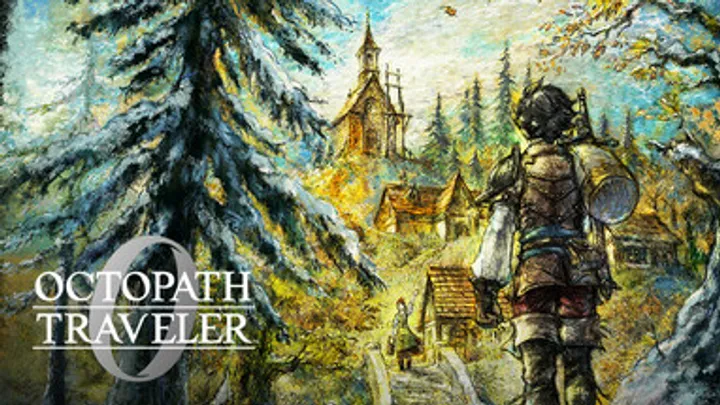
Octopath Traveler 0 enriches the HD-2D legacy with sophisticated storytelling and a deeper look into Orsterra’s early history. However, the most fascinating—and contentious—aspect of the game is not its visuals, combat, or music, but a specific narrative challenge: the tension between its nonlinear structure and its attempt to maintain a coherent, unified world-lore.
This article explores that issue in full depth, analyzing how the game’s freedom of progression affects world history, character arcs, and overarching themes. The sections below are arranged chronologically and thematically to reflect how the problem evolves throughout the game.
1. The Roots of Divergence: How the Prologue Establishes Fragmented Foundations
The eight prologue chapters introduce the cast in isolated scenarios, and this modular structure immediately shapes the complexity of the game’s narrative flow. Because players may choose any character as their starting point, the “true beginning” becomes a matter of personal perspective rather than canonical sequence.
This design empowers players but complicates world-building. Each prologue contains lore that appears foundational—ancient rituals, political conflicts, forgotten technologies—yet no single starting point confirms what the writers consider the chronological origin. Before the story truly begins, the narrative has already branched in eight simultaneous directions.
2. The Early Chapters and the Illusion of a Unified Timeline
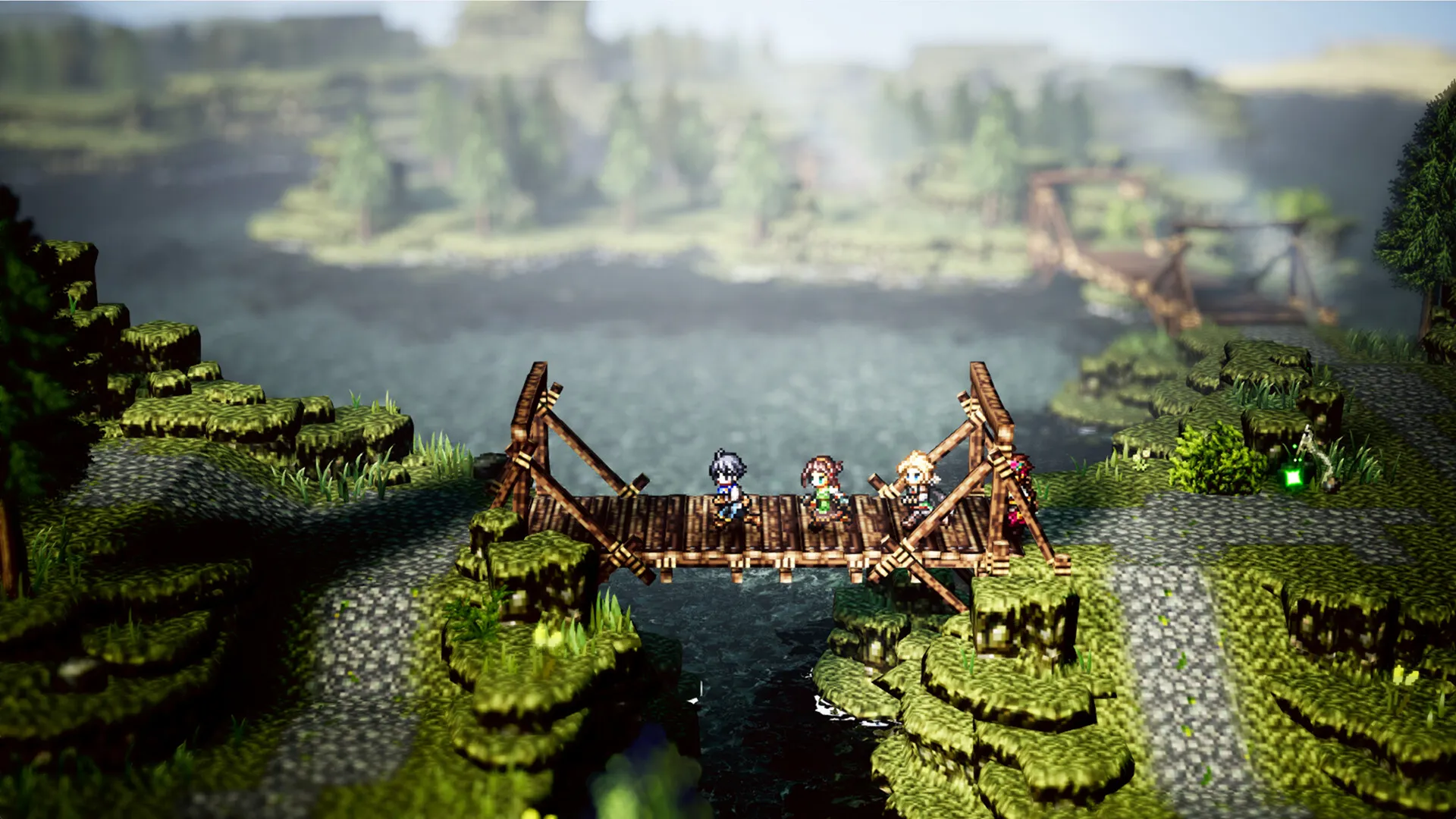
As soon as players advance into Chapter 1 arcs, a noticeable contradiction unfolds. Characters accompany one another in gameplay but do not meaningfully appear in each other’s narrative scenes. This creates what fans often call the “ghost party problem”: the party exists in battles and exploration, but not within the story itself.
Octopath Traveler 0 tries to mitigate this with optional dialogue and contextual quips, but these efforts cannot fully mask the structural divide. The early chapters create an illusion of unity, but the illusion is thin. Narratively, you are still consuming eight separate stories that only pretend to intersect.
3. Divergence in World-Lore: Conflicting Regional Histories
When Choice Outpaces Canon
As the world opens up, players begin to notice inconsistencies in historical details. Some regions treat certain past events as recent wounds, while others refer to the same events as distant history. In a linear story, the writers would strategically sequence these revelations; in Octopath Traveler 0, the order depends entirely on the player.
This is not necessarily a flaw in the lore itself—internally, the developers have clearly crafted a consistent historical timeline. But the player's nonlinear progression shatters that timeline into pieces, and the pieces sometimes feel out of place. Certain revelations seem prematurely delivered; others arrive long after their intended narrative momentum has passed.
4. Mid-Game Attempts at Convergence and Their Narrative Strain
Stitching the Timeline Back Together
During the middle portion of the game, recurring factions and key antagonists are introduced to unify the sprawling narrative. These characters are intended to serve as narrative glue between disparate storylines. However, depending on the order players encounter them, these antagonists may feel underdeveloped, repetitive, or strangely omnipresent.
For example, meeting a major villain in a weaker character’s arc before encountering them in their “primary” storyline can undermine the dramatic buildup. Conversely, encountering them too late can reduce the surprise of their reveal. The game tries to compensate through repeated motifs and symbolic imagery, but these techniques are often not strong enough to overcome the nonlinear structure.
5. Character Arcs in Conflict: Personal Journeys vs. World Stakes
Whose Story Truly Matters?
Each protagonist carries emotional weight, but because the eight arcs do not meaningfully interact, their stakes often feel misaligned. A character caught in a small-town drama may be pursued simultaneously with another character unraveling world-ending conspiracies.
H4: Internal vs. External Priorities
Players often feel narrative dissonance when switching between:
- a deeply personal revenge quest
- an economic conflict involving state corruption
- a metaphysical struggle tied to ancient magic
These arcs operate at entirely different scales, and without cross-character acknowledgment, they begin to feel like parallel universes rather than shared experiences.
6. The Late Game’s Accumulation of Unresolved Chronology
In the late stages, the player now has dozens of isolated narrative threads that technically coexist but rarely intersect. Because Octopath Traveler 0 does not lock chapters behind certain world events, players can unintentionally experience consequences before causes.
For example, learning about a legendary catastrophe in one route may occur long before the route that explains the catastrophe’s origins. The impact is weakened not because the writing is poor, but because the player’s freedom has unintentionally rearranged the intended emotional rhythm.
The game introduces late-game “lore anchors” to hint at an overarching mythos, but these anchors often feel like patches rather than core load-bearing structures.
7. Party Banter as a Narrative Bridge—Effective but Insufficient
The Strengths
Optional travel banter is one of the series’ signature tools for building relationships. In Octopath Traveler 0, the banter is richer, more reactive, and more character-specific.
These exchanges:
- offer emotional relief
- clarify each hero’s worldview
- remind players of the party’s existence within the story
The Limitations
But banter remains optional. It never influences the main plot, nor can it correct contradictions caused by nonlinear progression. As a result, banter becomes a delightful enhancement but not a structural solution. It cannot unify eight independent timelines into a single cohesive narrative reality.
8. Hidden Lore, Secret Bosses, and the Problem of “True Endings”
Completion as Correction
A major element of Octopath Traveler 0 is its hidden lore—optional dungeons, secret bosses, and cryptic manuscripts that reveal the world’s deeper truths. For dedicated players, these revelations often serve as the missing puzzle pieces that reconcile contradictory story elements.
The Issue
However, relying on secret content to fix publicly visible narrative problems creates a structural imbalance. The majority of players will never unlock the “true” lore, meaning the intended coherent timeline exists only for completionists. This makes the canonical story feel strangely inaccessible and inconsistent for casual or mid-level players.
9. Narrative Payoff vs. Player Order: Emotional Impact Dilution
As players approach the final chapters of each protagonist’s story, emotional crescendos should feel powerful and interconnected. Unfortunately, without a unified narrative spine, these climaxes feel more like eight seasonal finales from different shows rather than components of a single epic.
The emotional dilution becomes most apparent when the order of completion weakens later revelations. If a player finishes the most dramatic or lore-heavy story early, subsequent stories feel anticlimactic. The narrative impact becomes a casualty of the game’s structural freedom.
10. The Finale Chapters and the Challenge of Canon Formation
The final chapters attempt to merge character arcs into a centralized confrontation with the game’s core antagonist. Structurally, this is the closest the game comes to offering a linear experience. However, because the preceding twenty to fifty hours were nonlinear, the final convergence feels abrupt.
The game does answer many of its lingering questions, but it cannot retroactively fix the divergent chronology that shaped the player’s journey. The final hours pose another question as well:
Does a unified ending matter if the path to reach it differs wildly for every player?
For many fans, the answer is yes—consistency of lore matters, even in a nonlinear RPG. For others, the fragmented structure is a feature, not a flaw. Yet Octopath Traveler 0 sits in an uncomfortable middle ground, wanting both freedom and cohesion without fully committing to either.
Octopath Traveler 0 is a beautiful, ambitious RPG whose nonlinear structure is both its greatest strength and its most significant narrative challenge. The tension between player freedom and lore coherence is never fully resolved. Although the game attempts to unify its eight storylines through recurring themes, optional dialogue, secret lore, and a final convergence, the inherent fragmentation of its progression system exposes cracks in chronology and emotional pacing.
The result is a world that feels rich but occasionally disjointed, compelling yet inconsistent—a fractured road of fate, both narratively and structurally.